Simon Dadswell

Effective staff management is more important than ever. With staff turnover remaining one of the hospitality industry's biggest challenges, restaurants must find ways to improve retention, productivity and employee engagement.
While the challenges have evolved, the fundamentals remain the same. Align staffing with demand, maintain clear communication, incentivise performance and pay close attention to costs and employee morale.
The difference today is that these objectives no longer need to be managed through spreadsheets, or paper rotas. Modern restaurant technology provides operators with the tools to make more informed decisions, automate administrative tasks and gain greater visibility into workforce performance.
How Restaurant Technology Improves Staff Management
Restaurant management software helps operators schedule shifts, control labour costs, monitor employee performance, improve communication and increase staff retention.
By bringing workforce management into a single platform, restaurants can reduce administrative workloads, improve productivity and gain greater visibility over labour expenditure.
Most restaurant management platforms allow operators to track staff rotas, attendance, labour costs, performance targets and incentive programmes across the entire operation. This creates greater accountability, improves workforce visibility and helps managers make more informed staffing decisions.
Key benefits
- Free up time: Reduce the administrative burden of creating rotas, managing availability and maintaining spreadsheets.
- Build cost-effective schedules: Align staffing levels with demand while monitoring labour costs in real time.
- Use AI-driven forecasting: Forecast labour requirements using historical sales data and projected demand.
- Improve performance: Monitor individual and team performance, reward top performers and identify opportunities to increase profitability
Reduce Labour Costs Through Smarter Scheduling
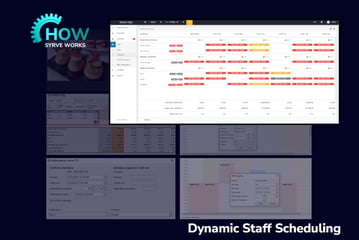
Planning shifts weeks in advance is essential for the smooth running of a restaurant. This is especially critical for small to medium restaurants in which even minor fluctuations in demand can have a significant impact Staff scheduling does not have to be a time-consuming, complex and manual task prone to errors.
Modern workforce management tools help operators create more efficient rotas, improve labour utilisation and maintain appropriate staffing levels throughout the week.
Key benefits
- Build accurate staff schedules: Ensure every working hour is used effectively. Simplify cleaning schedules, temperature checks and other routine tasks, while managing rotas across multiple sites if required.
- Control labour costs: Monitor labour expenditure as schedules are created and adjusted, helping you stay on budget and avoid unnecessary staffing costs.
- Use AI-driven forecasting: Forecast staffing requirements based on expected demand. See who is available, avoid scheduling conflicts and plan ahead for holidays and absences.
- Improve team morale: Give employees greater visibility over their schedules and shifts. Better communication and fairer scheduling can help reduce frustration and improve engagement.
Improve Staff Motivation and Retention
Technology can help improve team morale and motivation. Many restaurant management platforms allow operators to create incentive schemes that reward strong performance while remaining aligned with business objectives.
Bonuses can be linked to sales, upselling success, customer satisfaction scores or other performance metrics, ensuring rewards are tied directly to measurable outcomes.
Key benefits
- Improve performance: Incentivise staff to give their best, increase efficiency and improve the customer experience. Reward and retain your best people
- Target incentives: Define targets for individuals or teams, or raise company-wide performance by managing team metrics across sites
- Track outcomes and costs: Calculate bonuses automatically. These could be based on a percentage of sales, per sale, a designated sum, or other performance related factors
- Measure effectiveness: Rely on intelligent reporting to tracks rewards and offers insight into granular, real-time data to enable transparency and drive decisions
Keep Teams Connected Across Multiple Sites
Many modern restaurant management platforms include tools that help businesses communicate with employees across multiple sites. Through mobile apps and employee portals, staff can access schedules, company updates, performance information and important notifications from a single location.
This ensures employees remain informed, engaged and aligned with business objectives. Managers can communicate more effectively, while staff gain greater visibility over their responsibilities, performance targets and reward programmes.
Key benefits:
- Boost morale: Stay connected with all staff and make them feel valued, keeping them in the loop about what’s happening in your company
- Share important news effectively: Don’t rely on printed memos, emails or word-of-mouth. Push notifications of new menus, company news and other key details
- Allow your staff to keep track of goals: Let staff know their performance goals and how they’re doing in your incentives programmes
- Use insights for better management: Let managers see each employee’s attendance rates, satisfaction scores, how many discounts/refunds they’ve given away
Monitor Staff Performance in Real Time
Because modern restaurant management platforms record workforce activity in real time, managers can gain immediate visibility into staff performance. This makes it easier to recognise top performers, identify areas for improvement and make more informed decisions about training, staffing and recruitment.
Key benefits:
- Access valuable reports: Access valuable data on labour costs and other key performance indicators (KPIs) that provide a complete operational overview in real-time.
- View staff performance: Monitor attendance and the progress of rewards programmes
- Receive alerts: Automatically flag unusual transactions and operational activities that may require attention. These could include excessive discounts, order amendments after printing, bill cancellations, payment removals, write-offs or other exceptions that fall outside normal operating patterns.
Gain Full Visibility of Labour Costs
Effective labour management requires visibility. Modern workforce management platforms provide real-time insight into labour costs, allowing operators to monitor expenditure as schedules are created and shifts are worked, rather than waiting until payroll is processed.
Many systems can also track wages, overtime, bonuses and other labour-related costs automatically, helping restaurants maintain tighter control over workforce expenditure.
Key benefits:
- Monitor costs: Calculation of an employee’s ‘tentative’ wages can be performed automatically.
- View approximate labour costs at any time: Monitor projected labour costs as shifts are scheduled and worked, helping you understand workforce expenditure before payroll is processed.
- Ensure payroll accuracy: Integrations with payroll and HR systems help reduce manual data entry, improve accuracy and ensure employees are paid correctly and on time.
Final Thoughts
Effective staff management is about much more than creating rotas and filling shifts. It requires a careful balance of scheduling, communication, motivation, performance management and cost control.
While these responsibilities have traditionally been time-consuming and administrative in nature, modern restaurant technology can simplify many of the underlying processes.
By providing greater visibility into workforce performance and labour costs, operators can make better decisions, improve employee engagement and create a more productive working environment.
For small and medium-sized restaurants in particular, even modest improvements in staff retention, productivity and labour efficiency can have a meaningful impact on both operational performance and long-term margin protection.
Frequently Asked Questions
What is restaurant staff management software?
Restaurant staff management software helps operators schedule shifts, track attendance, monitor employee performance, manage incentives and control labour costs from a single platform.
How can restaurant software reduce labour costs?
Restaurant software can reduce labour costs by aligning staffing levels with demand, improving workforce planning and providing visibility into labour expenditure before payroll is processed.
How do restaurants create effective staff schedules?
Effective staff schedules are based on expected demand, historical sales patterns, employee availability and labour budgets. Scheduling software can help automate much of this process and reduce the risk of overstaffing or understaffing.
How can restaurants improve staff retention?
Restaurants can improve staff retention by maintaining clear communication, recognising strong performance, providing development opportunities and creating a positive working environment. Technology can support these efforts through scheduling, incentive and employee engagement tools.
What is labour cost forecasting?
Labour cost forecasting is the process of estimating future staffing requirements and workforce expenditure based on expected demand, trading patterns and historical performance data.
Can technology improve employee performance?
Yes. Restaurant technology can help improve employee performance by providing clear schedules, performance tracking, communication tools, incentive programmes and real-time visibility into individual and team metrics.



.jpg?width=390&height=240&name=4.02_header(1).jpg)
.png?width=390&height=240&name=1-header(1).png)