 Dale Shelabarger
.jpg?width=800&height=500&name=restaurant-owner2(1).jpg)
A restaurant sector in crisis mode. Business rates through the roof. Governmental relief sporadic and haphazard. Welcome to 2026! What a time to be alive if you’re a restaurant operator. A good moment perhaps, to put forward some key survival strategies for this coming year. And as we frequently mention, the only recourse is to look inward.
Here are five critical pathways that offer the best chance of seeing out 2026 and positioning your business for whatever comes next. Let’s start with the customer.
.jpg?width=636&height=424&name=unhappy-customer(1).jpg)
1. Remove Friction from all Customer Touchpoints
It’s fair to say that the customer of 2026 is an impatient, demanding and expectant creature. A seamless service, experience and convenience have become the holy trinity. But it’s not that they’ve suddenly become unreasonable. It’s because the context and climate around them has changed.
‘Instant’ has become the norm in everyday life. The cost of living has reset price expectations. And endless distraction has reduced tolerance for friction. These cultural shifts have redefined what customers consider to be an acceptable standard of service. So how do beleaguered operators survive in such an exacting climate?
Key Strategies
Streamline Ordering Processes - Embrace QR menus, self-service kiosks, and mobile delivery ordering solutions - they’re fast becoming baseline expectations for customers. Also ensure your staff have the tools to ensure a smooth ordering process. This means a fully integrated POS system that unifies orders and payments. Gone are the days of handset chase-ups and queues at the till.
Optimise Service and Waiting Times - Optimise service time wherever you can. In the kitchen, KDS screens are a no-brainer, especially those that sequence orders in real-time and display cooking times. POS systems that afford two-way communication between front and back of house are also crucial. They prevent delays and allow servers to communicate confidently with customers.
Manage Delivery Efficiently - Choose a POS platform that centralises delivery order management, preferably one that injects orders directly into your production pipeline. This effectively puts an end to tablet hell, eliminating all the errors and confusion that come with it. Don’t overlook driver management either. GPS tracking and AI-powered route optimisation are now industry standards.
Simplify Payment and Exit - Offer flexible payment options that allow for contactless and mobile wallets. POS platforms that provide easier split-bill management are preferable too. These will reduce friction at a time when emotions are most heightened. A smooth checkout will ensure the guests’ experience ends on a positive note. Remember that ‘experience’ is everything these days.
Extend the Experience Post-Visit - Make customer relationship management a core strategy. In 2026 this revolves around hyper-personalisation. In practice it means using accurate ordering and visit data to deliver timely, personalised follow-ups as opposed to generic outreach. RFM analysis for restaurants is especially helpful here, allowing you to segment customers and target them more effectively.
2. Treat Data as a Decision Tool
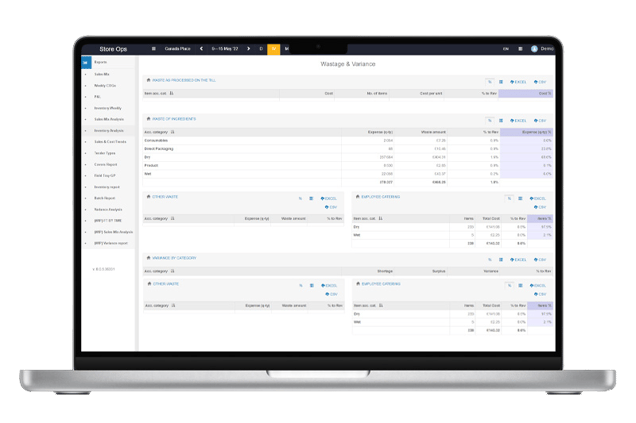
The business rates controversy, rising labour costs and a far more exacting clientele should be plenty reason for operators to dispense with instinct-based decision-making. It’s an archaic way of running any business, let alone one enmeshed in such a brutal industry. In 2026, prudent decision-making depends, more than ever, on good data.
Key Strategies
Prioritise Actionable Data over Vanity Metrics - Focus on data that influences decisions, rather than the surface-level stuff such as total covers served or revenue growth. Without any context, these don’t lead to better decisions. Instead, pay attention to the metrics that signpost pressure points requiring intervention. Things like service times, shift/menu performance and visit frequency.
Use Real-Time Data to Intervene Early - Use real-time data to identify bottlenecks, shift imbalances and service delays as and when they crop up. This allows issues to be rectified before they escalate. In the long run, ironing out inefficiencies early prevents them from compounding into stressed out staff, poorer guest experiences and ultimately, lost revenue.
Link Your Operational Data - Ensure your POS system connects all operational data, from sales and labour expenses to inventory, kitchen performance, and customer behaviour. It’s the only way to eliminate data silos and ensure decisions are made with a complete, accurate view of how your business is really performing.
Let Customer Behaviour Guide Retention Campaigns - Don’t waste your time with generic outreach strategies. They no longer work. Today, successful retention campaigns are driven by real customer behaviour rather than assumptions. As mentioned, reporting tools such as RFM analysis is useful, enabling you to segment restaurant customers and then target them with highly relevant, timely messages.

3. Focus on Staff Retention, Not Acquisition
High staff turnover is a persistent problem in the restaurant sector that’s been around since year dot. It’s a costly and disruptive issue that weakens service consistency, places additional pressure on remaining staff and drains in-house knowledge.
Given that financial pressures have intensified in recent years, the problem has become even more acute. Therefore, the onus is on operators to improve staff retention. It’s significantly cheaper than onboarding and far less disruptive.
Key Strategies
Stabilise Rotas and Working Patterns - To avoid burnout and protect morale, your rotas should be balanced and fair. Staff should have the ability to strike a healthy work/life balance and recover their wits between shifts. Forecast-driven staff scheduling can play a critical role here because it aligns labour with actual demand, thus reducing the need for last-minute changes.
Reduce Front of House Stress - Be sure that your restaurant tech removes friction instead of creating it. Staff don’t want to contend with slow or unreliable POS systems, nor do they want to be bogged down by the kind of operational minutiae that could easily be handled by a well-designed system. When systems create friction rather than remove it, they quietly undermine morale and retention.
Encourage Open Communication - Make sure your staff feel heard, especially if you run a large operation in which cog-in-the-wheel mentalities are common. Personal staff pages and digital hubs can be very helpful in this regard, providing employees with feedback channels, while allowing employers to share company news.
Create Visible Progression - Provide your staff with tangible progression goals instead of vague promises about career progression. Staff retention improves when employees are able to see a future for themselves within a business. Staff bonus systems and incentive structures are becoming increasingly common features of restaurant management systems.
4. Take Full Control of Your Costs
Restaurant cost control takes on even greater meaning in 2026, with the sustained pressure from business rates, labour costs, inflation and utilities, leaving little room for a manoeuvre. What was once a background discipline is now front and centre for most restaurant operators.
Unfortunately, many struggle to translate cost control strategies into disciplined, system-level action. Yet, financial management can no longer be about periodic belt-tightening or reactive management. It must be embedded, automated, monitored and predictable.
Key Strategies
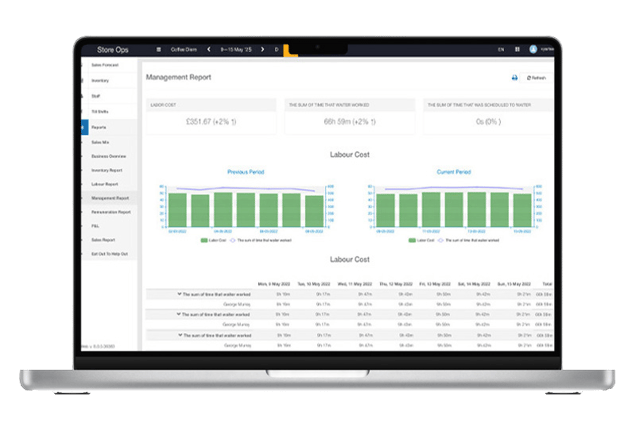
Don’t Rely on Top-Line Cost Tracking - Be mindful that high-level P&L figures only tell you half the story. You need granular visibility to understand where costs are rising and which parts of your business are absorbing the impact. From individual ingredients and menu items through to ordering channels and stock levels, your data should enable informed decisions instead of reactive cuts.
Align Costs with Demand - Stop planning rotas, food purchasing, production and other expenses based on averages and hunches. Overstaffing, excessive ordering and waste will invariably follow. In 2026, cost alignment should be driven by intelligent forecasting of the kind that analyses complex sales patterns, together with external demand to present genuinely actionable insight.
Pay Attention to Variable Costs - Ensure full visibility with regard to fluctuating expenses. Delivery commissions, promotions, wastage and also overtime can be silent killers if left unmanaged. Retrospective analysis is no good here. Active management is essential. So your reporting suite should allow you to spot deviations early and intervene before margin erosion becomes terminal.
Track Margin at Item and Channel Level - Closely track profits at dish level - a full restaurant doesn’t guarantee profits if the items being sold carry low margins. Methodologies such as ABC/XYZ analysis can be a great help because they allow you to measure contribution per dish. It then becomes far easier to promote what makes money and rework what underperforms.
Reduce Cost Blind Spots - Eliminate data silos completely. The result of disconnected, fragmented systems, they simply have no place in 2026. When data about sales, labour, inventory and ordering live in isolation, inefficiencies will go unchecked and compound. Avoiding these types of blind spots demands a fully-integrated and connected RMS.
.jpg?width=636&height=424&name=restaurant-resilience(1).jpg)
5. Aim for Resilience, Not Perfection
Ambitious growth plans, ‘innovations’ and bold expansion strategies are for businesses large enough to absorb the risk. But for most rank-and-file operators, this simply isn’t the reality in 2026. Those who survive will be the ones who focus on resilience and control. On the ground, this means being able to cope with operational workflows, demand swings, exacting customers and staff turnover.
Key Strategies
Standardise and Centralise - Standardise and streamline workflows wherever you can, be it in the front or back-of-house. It’s the only way to reduce complexity and ensure consistency, whether you run a chain or single-store operation. Day-to-day operations need to be easier to manage, for the sake of your staff and your customers.
Reduce Dependency on Individuals - Don’t assume that a few trusted employees will always be present to keep things ticking over. Illness, absences and burnout will quickly expose gaps that disrupt service. Instead, ensure your operations are repeatable and transferable. Critical information should be easily accessible. Knowledge and process should live in your system, not in people’s heads.
Automate the Mundane, Support the Human - Don’t be spooked by tech adoption. You simply cannot afford to in 2026. Make full use of integrated systems that automate routine tasks, be they stock counts, order routing or invoice management. Your team will then be able to focus on service quality and business growth. The long-term value of such an approach cannot be overstated.
Plan for Disruption – Treat inflation, staff shortages and fluctuating demand as permanent conditions. Then prepare your business accordingly. This means building forward-thinking strategies and workflows around volatility. That, in turn, depends on operational systems designed to keep pace with change. In 2026, the defining characteristics are real-time visibility, end-to-end integration and self-driving functionality.
Final Thoughts
Operators who last the pace in 2026 will be inward-looking, disciplined and better equipped to withstand the many challenges ahead. In practice this means removing friction for both staff and customers, using data to guide decisions and keeping a tight rein on costs. All of this depends on systems that allow operators to perform consistently, regardless of the conditions.



.png?width=390&height=240&name=wheel-of-liverpool(1).png)