 Dale Shelabarger
.jpg?width=800&height=500&name=Loyalty%20Segmentation_header(1).jpg)
In an industry where customer acquisition costs are high and margins slim, building lasting relationships with diners is critical. A well-planned loyalty strategy can encourage repeat visits, increase customer lifetime value and help restaurants generate more revenue from the guests they have already acquired.
Many F&B operators, particularly small establishments and independents, still rely on generic loyalty schemes driven by limited customer data. The result is often a stream of one-size-fits-all incentives that fail to reflect how frequently customers visit, what they order or how much they spend.
Restaurant customer segmentation provides a more effective approach. By dividing diners into meaningful groups, operators can create targeted rewards and communications that are more likely to generate engagement. Loyalty segmentation applies this process specifically to repeat visits, spending patterns, customer value and the risk of churn.
What Is Restaurant Customer Segmentation?
Restaurant customer segmentation is the process of dividing diners into groups based on shared characteristics or behaviour. Customers may be segmented according to visit frequency, average spend, preferred dishes, ordering channel, promotion usage or engagement with a loyalty programme.
These groupings allow restaurants to move beyond generic marketing. Instead of sending every customer the same discount, operators can tailor campaigns to the needs of new diners, regular visitors, high spenders, digital customers and those at risk of lapsing.
What Is Loyalty Segmentation?
Loyalty segmentation is a focused form of restaurant customer segmentation that uses sales, visit and engagement data to group customers according to their relationship with the business.
A restaurant might, for example, separate frequent visitors from occasional diners, distinguish high-value customers from promotion-responsive customers or identify guests who have not returned for several months. These segments can then be targeted with rewards designed to increase visit frequency, improve retention and generate a better return on marketing spend.
Types of Restaurant Customer Segmentation
Restaurants can segment customers in several ways, depending on the data available and the goals of the campaign.
| Segmentation Type | Based On | Restaurant Example |
|---|---|---|
| Behavioural | Visits, orders and engagement | Frequent, occasional and lapsed diners |
| Monetary | Average spend and lifetime value | High-value and budget-conscious customers |
| Preference-Based | Menu choices and dietary preferences | Vegetarian diners, family-order customers and frequent coffee buyers |
| Channel-Based | Where customers place orders | Dine-in, takeaway, delivery and app users |
| Daypart-Based | Time and occasion of visit | Breakfast customers, lunchtime workers and evening diners |
| Loyalty-Based | Membership and reward activity | Active members, brand advocates and dormant members |
Using RFM Analysis to Segment Restaurant Customers
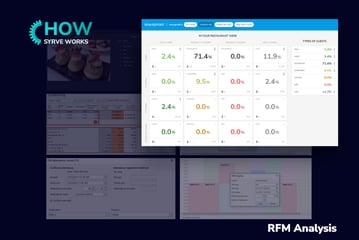
RFM analysis is a practical form of customer segmentation that organises restaurant customers using three core measures:
- Recency: How recently a customer visited or placed an order
- Frequency: How often they visit or purchase
- Monetary value: How much they spend over a given period
Combining these metrics helps restaurants distinguish between groups such as loyal regulars, promising new customers, high-value diners and customers at risk of lapsing. It also provides a straightforward framework for deciding which audience should receive each offer.
How to Segment Restaurant Customers
Although it may initially appear daunting, restaurant customer segmentation follows a logical process that can be broken down into five steps:
- Define Your Goals
- Collect the Data
- Choose Your Criteria and Segment
- Develop Targeting Strategies
- Monitor and Refine
-1.jpg?width=636&height=424&name=incontent_1(1)-1.jpg)
1. Define Your Goals
Before collecting and analysing customer data, clearly define what you want to achieve. This will allow you to choose the most useful segmentation criteria and align each campaign with your restaurant’s wider commercial goals. Typical objectives include:
- Increase visit frequency
- Boost average spend
- Improve customer engagement and retention
- Reward brand advocates
- Optimise marketing spend
- Increase customer lifetime value
- Drive digital engagement
(1).jpg?width=636&height=424&name=incontent_2%20(1)(1).jpg)
2. Collect the Data
Once you have defined your objectives, move on to data collection. This forms the foundation of the entire strategy, providing the insights needed to understand customer behaviour, purchasing patterns and preferences.
Useful data may include visit frequency, order history, average spend, lifetime spend, order source, payment method, promotion usage, loyalty activity and basic demographic information.
For F&B operators, this information is often spread across POS terminals, online ordering systems, mobile apps, CRM or loyalty software and website analytics platforms. When these systems operate separately, data can become fragmented, inconsistent and difficult to use.
A comprehensive, fully integrated POS and restaurant management system can centralise these operational metrics and provide a more reliable view of customer activity.
(1).jpg?width=636&height=424&name=incontent_4%20(2)(1).jpg)
3. Choose Your Criteria and Segment
With reliable data in place, select the criteria you will use to organise customers. These should relate directly to the goals established in the first stage.
- Visit or order frequency: Reveals frequent, occasional and lapsed customers
- Visit or order recency: Reveals current engagement and potential churn
- Average spend per visit: Reveals high spenders and budget-conscious customers
- Total lifetime spend: Reveals high-value and loyal customers
- Time of visit: Reveals peak, off-peak and daypart preferences
- Order composition: Reveals menu and dietary preferences
- Order channel: Reveals preferred ordering platforms and digital usage
- Promotion or discount usage: Reveals customers most responsive to incentives
These criteria can be combined to create practical groups such as new customers, regular visitors, high spenders, occasional diners, lapsed customers, promotion-responsive customers, digital customers and brand advocates.
.jpg?width=636&height=424&name=incontent_3(1).jpg)
4. Develop Targeting Strategies
With your restaurant loyalty objectives clearly defined, the data collected and customers categorised, you can begin developing targeted campaigns for each segment.
Increase Visit Frequency
Increasing visit frequency is about encouraging infrequent and lapsed customers to return more often.
Useful strategies:
- Punch card rewards (buy one, get one free)
- Milestone discounts (receive a discount after every fifth visit)
- Weekly or monthly visit challenges (visit three times this month for a reward)
- Time-specific promotions (double loyalty points on Wednesdays)
- Recurring visit bonuses (bonus points for multiple visits per week)
- Time-limited discounts (5% off for returning within five days)
- Personalised offers (“We miss you” discounts)
- Frequency-based tiers (VIP status for reaching a set number of monthly visits)
- Loyalty streak bonuses (rewards for consecutive visits)
Boost Average Spend
Restaurants can also use segmentation to encourage loyal and returning customers to increase the value of each order.
Useful strategies:
- Spending-based rewards (earn extra points on orders over £50)
- Upselling offers (double points when you buy a dessert)
- Tiered discounts (spend £60 and get 10% off your next visit)
- Bundled offers (two main courses, a shared starter and dessert for a set price)
- Free delivery thresholds (get free delivery on orders over £20)
- Cashback on large orders (£5 cashback on orders over £30)
Improve Customer Engagement and Retention
Reducing churn and retaining existing diners is a major priority for most operators. Personalised incentives and exclusive benefits can give customers a stronger reason to return.
Useful strategies:
- Personalised email rewards (“Hi Joe, we see that you enjoy Margherita pizza. Enjoy 20% off your next pizza order.”)
- Personal milestone rewards (birthday and anniversary offers)
- Personalised reminder emails (“We miss you. Enjoy a £10 discount on your next visit.”)
- Exclusive loyalty offers (priority seating or member-only dishes)
- Exclusive event access (tastings and new menu launches)
- Triple-point days
- Loyalty streak awards (rewards for consecutive visits)
Reward Brand Advocates
Frequent and highly engaged customers can be segmented as brand advocates and rewarded with high-tier or VIP benefits that encourage referrals and word-of-mouth recommendations.
Useful strategies:
- Referral rewards (claim a free main course when you refer a friend)
- Ambassador reward schemes (be the first to sample a new menu)
- Personalised rewards (“Thank you for your loyalty. Enjoy £5 off your next meal.”)
- Reward codes for friends and family (share a 10% discount with code FAMILY10)
- Personalised merchandise (branded gifts for top advocates)
- Feedback rewards (£5 off a future visit after completing a private customer survey)
Drive Digital Engagement
Digital engagement strategies can be tailored according to the channels and platforms each customer prefers.
Useful strategies:
- Channel-exclusive rewards (unlock a free drink when you order through the app)
- Online-order perks (5% off online orders)
- Push-notification rewards (special deals sent through the app)
- App loyalty tiers (tiered schemes exclusive to app users)
- In-app surveys (complete a survey and claim 10 loyalty points)
- QR code discounts and loyalty points (scan to register and receive 15% off)
- App-only milestone rewards (claim a birthday gift through the app)
(1).jpg?width=636&height=424&name=incontent_Syrve%20(1)(1).jpg)
5. Monitor and Refine
The final stage is to monitor the performance of each loyalty incentive and refine it accordingly. Analyse and track the metrics used to create the original segments and, where possible, collect direct customer feedback through surveys, app prompts and digital channels such as social media.
Look for patterns that reveal what is and is not working. Useful measures include visit frequency, customer spend, reward redemption rates, average spend per visit, customer retention and the performance of individual campaigns.
For the best results, use a comprehensive restaurant analytics suite that provides consistent data and makes it easier to identify changes in customer behaviour.
Customer Segmentation vs Personalisation
Customer segmentation and personalisation are closely related, but they are not the same.
- Customer segmentation groups people with similar characteristics or behaviour together.
- Personalisation adapts a message, reward or recommendation for an individual customer.
For example, a restaurant could use segmentation to send a reactivation offer to every customer who has not visited for 90 days. It could then personalise that offer by promoting a dish each recipient has ordered previously.
Final Thoughts
Restaurant customer segmentation gives operators a clearer understanding of who their customers are, how they behave and what may encourage them to return. Loyalty segmentation applies these insights to repeat visits, spending and engagement, helping restaurants replace generic discounts with more relevant campaigns.
The process does not need to be overly complicated. With clearly defined goals, reliable customer data and regular performance monitoring, restaurants can create targeted incentives that support retention, increase customer value and improve marketing efficiency.
Looking for a sophisticated loyalty solution that helps you understand and engage your customers? Learn more about Syrve Loyalty.
Frequently Asked Questions
What Is Restaurant Customer Segmentation?
Restaurant customer segmentation is the process of dividing diners into groups based on shared characteristics or behaviour. Common criteria include visit frequency, average spend, order preferences, ordering channel and loyalty activity.
What Is Loyalty Segmentation?
Loyalty segmentation groups customers according to their relationship with a restaurant. Typical segments include new customers, regular visitors, high spenders, lapsed customers and brand advocates.
What Is RFM Segmentation in Restaurants?
RFM segmentation groups customers according to recency, frequency and monetary value. It helps restaurants identify loyal regulars, valuable customers and diners who may be at risk of lapsing.
What Data Is Used for Restaurant Customer Segmentation?
Restaurants can use visit history, order frequency, average spend, lifetime spend, menu preferences, order channel, promotion usage and loyalty activity to create customer segments.
Why Is Customer Segmentation Important for Restaurants?
Customer segmentation allows restaurants to replace generic promotions with more relevant offers. This can improve engagement, increase visit frequency, strengthen retention and reduce wasted marketing spend.
What Is the Difference Between Segmentation and Personalisation?
Segmentation groups customers with similar characteristics or behaviour, while personalisation adapts a message, reward or recommendation for an individual customer.