
 Dale Shelabarger
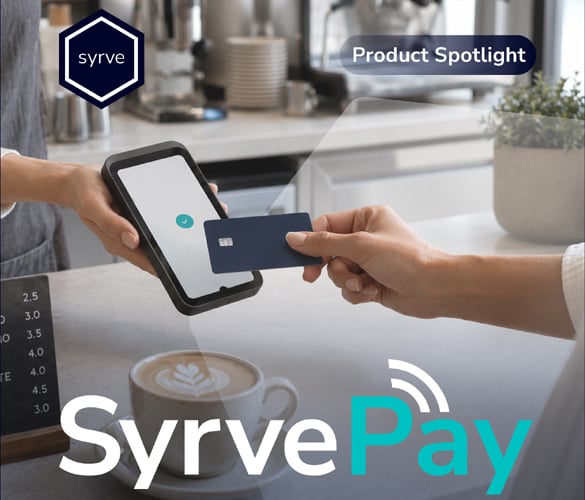
No matter what type of food service operation you run, the payment experience you offer your customers must be as smooth and dependable as the ordering and service that came before it. As the final stage of the customer journey it should be free of unnecessary frustration or delay.
But as with many other operational areas, fragmented and disconnected systems often contrive to cause problems on both sides of the counter.
Even today, many restaurants rely on unintegrated, disconnected payment processing systems, with orders handled through one platform and payments completed through another. Service slows as a result, the risk of errors increases.
Meanwhile, behind the scenes, managers often resort to matching payment records against POS sales data to confirm transactions are correct. Time is therefore lost, administrative workloads increase and data discrepancies creep in that can prove difficult to identify and resolve.
Whether put off by the perceived cost of integrated solutions, or as the result of legacy carryover, the operators that rely on this kind of arrangement risk slower service, reporting errors and needless administration.
For these very reasons, integrated payment solutions are close to becoming standard across the restaurant sector. Yet current solutions are not without their shortcomings.
Where Current Integrated Solutions Fall Short
In recent years, integrated payment platforms have proliferated to such a degree that most POS systems for restaurant operations now offer some form of connected payment functionality. However, the cost and capabilities of these solutions tend to vary quite considerably. Depending on the provider, restaurants may encounter:
Software subscription fees charged on top of payment processing costs
Recurring charges for each handheld device
Separate accounts and support arrangements with multiple payment providers
Additional charges not included in the headline rate
Upfront hardware costs when adding or replacing devices
Fragmented support because of different providers
Restricted access to support, especially outside of standard working hours
What Is Syrve Pay?
SyrvePay is an integrated payments solution designed to reduce the friction of fragmented payment systems, but without burdening operators with the kind of costs and limitations present in many current solutions.
It comprises five components:
-
Syrve POS – where payments are processed
-
Payment terminals – for processing card transactions and contactless payments
-
Syrve App – for configuring SyrvePay
-
Syrve Office – where reports can be viewed and managed
-
Regional payment processor – a third-party provider that processes the transactions
How Syrve Pay Works
SyrvePay is a plugin that’s installed on the Syrve POS and managed through Syrve App. It effectively embeds payments into front-of-house and back-office workflows which then remain synced with inventory and financial data.
As a fully integrated payments system, SyrvePay allows front-of-house staff to take orders from the main POS system or via handheld terminals – this is without switching to a separate payment device or entering transaction values manually.
For managers, manual reconciliation is no longer required because payments are automatically synced with sales and inventory data. All transactional data is centralised and easily accessible in Syrve Office.
The Key Benefits of Syrve Pay
For restaurant and food service operators, the benefits of using SyrvePay are wide-ranging.
Faster Checkouts
Payments can be processed more quickly, helping staff complete transactions efficiently and provide a smoother checkout experience.
Fewer Payment Errors
Using a single integrated system eliminates errors caused by manually re-entering transaction values and helps speed up service.
Centralised Reporting
Centralised transaction data allows managers to review sales, payments and refunds from one dashboard, reducing admin and saving time.
A Better Customer Experience
Faster payment processing and fewer mistakes leads to smoother table turns, a more professional final stage of service and happier customers.
Transparent, Competitive Pricing
Our simple pricing model is one of the key features that sets SyrvePay apart from many other integrated payment solutions. Rather than charging separate licence fees, software subscriptions or upfront hardware costs, we apply a single commission on all transactions, starting at 1.75% with no hidden fees or recurring charges.
Flexible Hardware Options
SyrvePay gives operators flexibility in how and where payments are taken. Staff can process orders and payments through supported handheld devices, including mobile or tablet devices and PDQ payment terminals.
Restaurants and food service operators are therefore able to choose the setup that best suits their service model, whether that means fixed POS configurations and/or tableside payments. Additional compatible devices can also be introduced as the business grows or during periods when greater payment capacity is required.
Single Support Route
SyrvePay provides a single point of contact for support queries. So, instead of contacting several suppliers to determine whether a problem lies with the POS, payment terminal, integration or transaction processing, operators can deal directly with Syrve.
Support is therefore simplified and issues resolved more quickly. Help is also available outside of standard business hours (9am to 11pm) 365 days a year.
Who is SyrvePay For
Built specifically for food service operations, SyrvePay aligns well with full and quick-service restaurants, bars and cafés.
For full-service restaurants, integrated tableside ordering and payment processing helps turn tables faster and more efficiently. At the same time, errors arising from switching terminals and re-entering transaction values are eliminated.
QSRs and cafés benefit from faster payment processing at the counter during peak times and busy trading periods when even the smallest delays can lead to queues. SyrvePay’s ability to integrate with kiosks is a major advantage, here.
For bars and other high-volume operations, SyrvePay’s simplification of payment handling also ensures a more efficient front-of-house service.
Final Thoughts
With speed, efficiency and convenience now paramount in hospitality, unified ordering and payment processing has become a critical component of the modern restaurant tech stack. Chasing card terminals is a front-of-house folly that belongs firmly in the past. For operators, the priority now is bringing key processes together, especially ordering and payment workflows.
Ready to simplify your payments? https://www.syrve.com
SyrvePay FAQs
What are unified payments in restaurants?
Unified payments connect ordering, payment processing and transaction data within the same operational environment. This reduces the need for separate systems and helps keep front-of-house activity and back-office records aligned.
What is the difference between integrated and standalone payment systems?
Standalone systems require payments to be handled separately from the POS, while integrated systems connect payment processing directly with the order and sales data recorded in the restaurant system.
What should restaurants look for in an integrated payment solution?
Key considerations include transaction fees, software costs, hardware requirements, POS compatibility, support availability, reporting capabilities and whether the solution fits existing restaurant workflows.
Are integrated payments only suitable for large restaurant groups?
No. Independent restaurants, cafés and bars can benefit from integrated payments just as much as multi-site operators, particularly where staff currently switch between separate ordering and payment systems.
Do integrated payments always require new hardware?
Not necessarily. Some solutions are app-based and can work with compatible existing devices, while others require specific terminals or handheld hardware. Operators should check compatibility before switching.
Can integrated payments help during busy service periods?
Yes. Removing unnecessary device switching and manual transaction entry can help staff process payments more efficiently when transaction volumes are high.
Are integrated payments useful for tableside service?
Yes. Where supported by compatible handheld devices, integrated payments can allow staff to take orders and payments at the table without returning to a fixed terminal.
How can restaurants compare integrated payment providers?
Operators should compare the total cost of ownership rather than looking only at the headline transaction rate. Software subscriptions, terminal fees, hardware costs, support arrangements and contract terms can all materially affect the overall cost.
Why does a single support route matter?
When POS, terminal and payment services are supplied separately, resolving an issue can involve several providers. A single support route can reduce the time spent identifying which supplier is responsible.



.jpg?width=390&height=240&name=7.08_header1(1).jpg)
.png?width=390&height=240&name=1-header(1).png)